The history of the rock cellar
Millions of years ago – The origin in stone
The history of the rock cellar begins long before Pfullendorf, the Adler area, or humans existed in this form.
Millions of years ago, the landscape around Pfullendorf was part of a primeval geological development. Over a long period, deposits, sands, and sediments formed the Molasse sandstone – the rock that today shapes the walls, niches, and vaults of the rock cellar.
This stone is not just a backdrop. It is the origin of this place. Anyone descending these stairs today is not simply entering a cellar, but a space hewn out of the natural subsoil of Pfullendorf.
1686 – The Adler Area
The history of today's Felsenkeller is closely linked to the traditional Adler area.
The Gasthaus Adler was first documented in 1686. For generations, this place was an important part of town life. Travelers, merchants, citizens, and guests all gathered here.
Below this historical area, a hidden world of stone, cold, and vaults later developed.
1730 – The Hell Cellar
The first known mention of the cellar dates back to 1730. At that time it was called "Höllkeller".
The name is likely connected to the nearby Höllbrunnen (Hell's Well) and the former Gebsentor (Gebsent Gate). This old name alone indicates that the cellar was no ordinary storage room. It belonged to a deeply rooted, historical structure of the city.
Deep beneath Pfullendorf, a place developed that was used, changed, and passed down over the centuries.
18th and 19th centuries – Hewn by hand into the rock
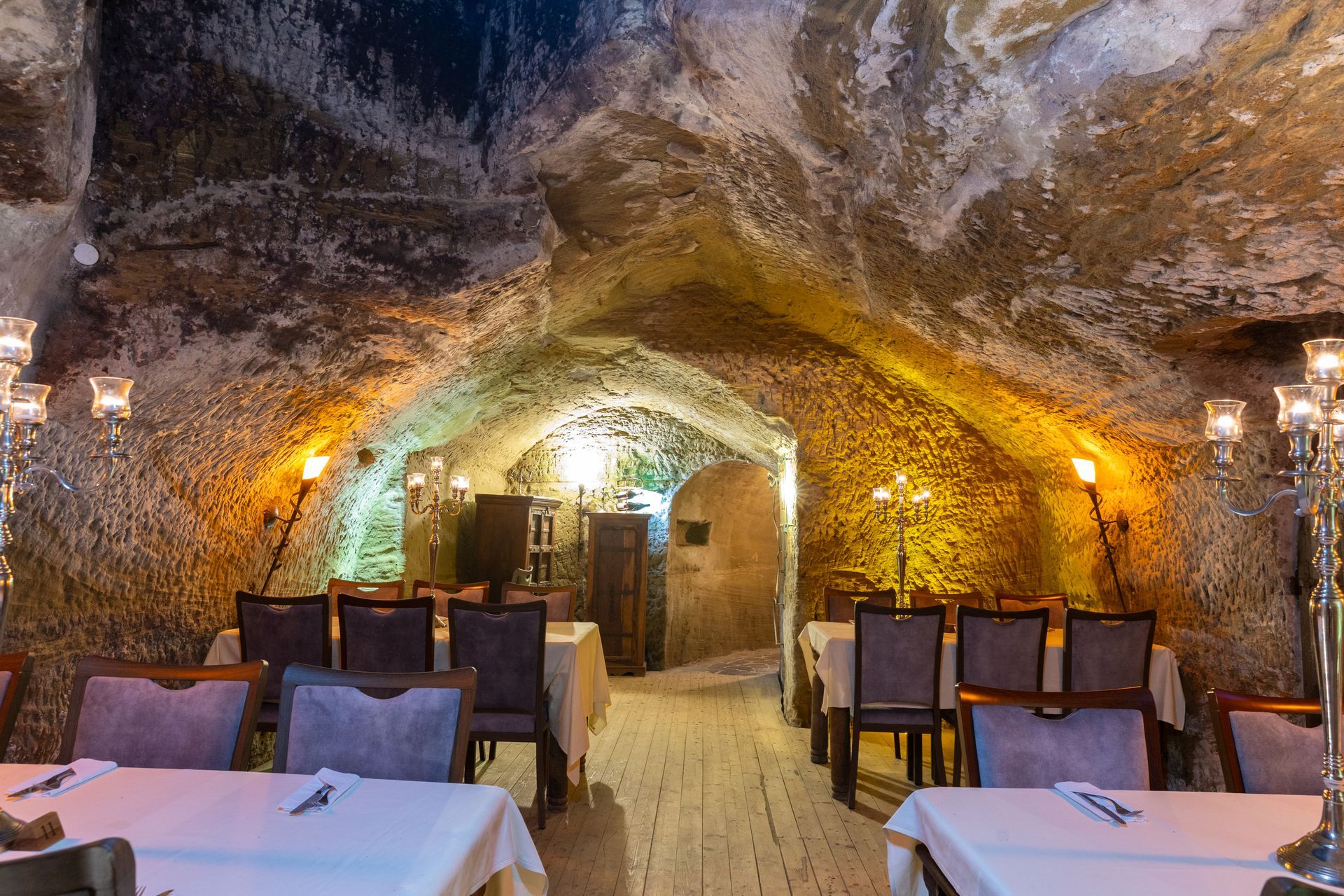
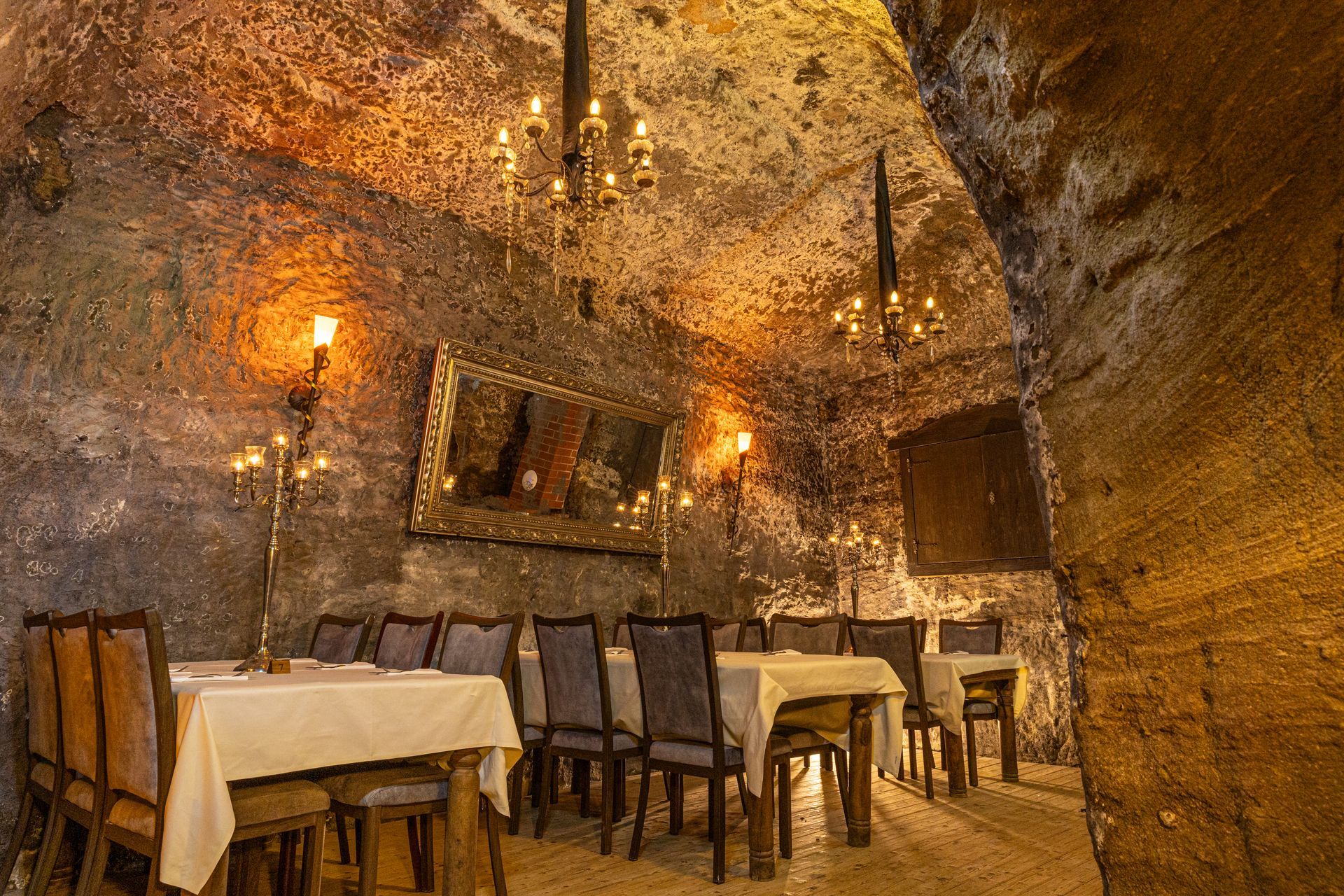
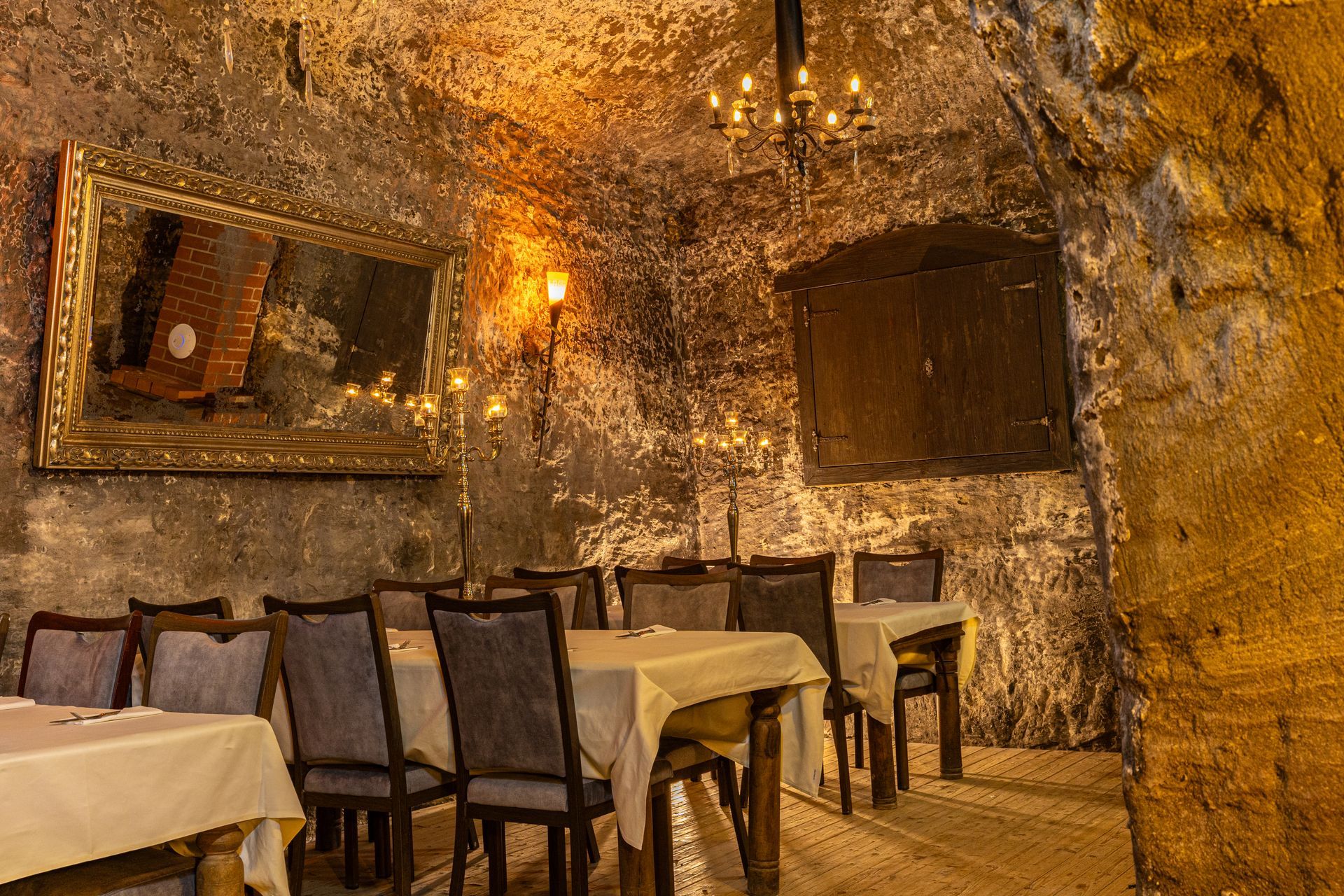
In a time without modern machinery, the rooms of the cellar were hewn by hand into the Molasse sandstone.
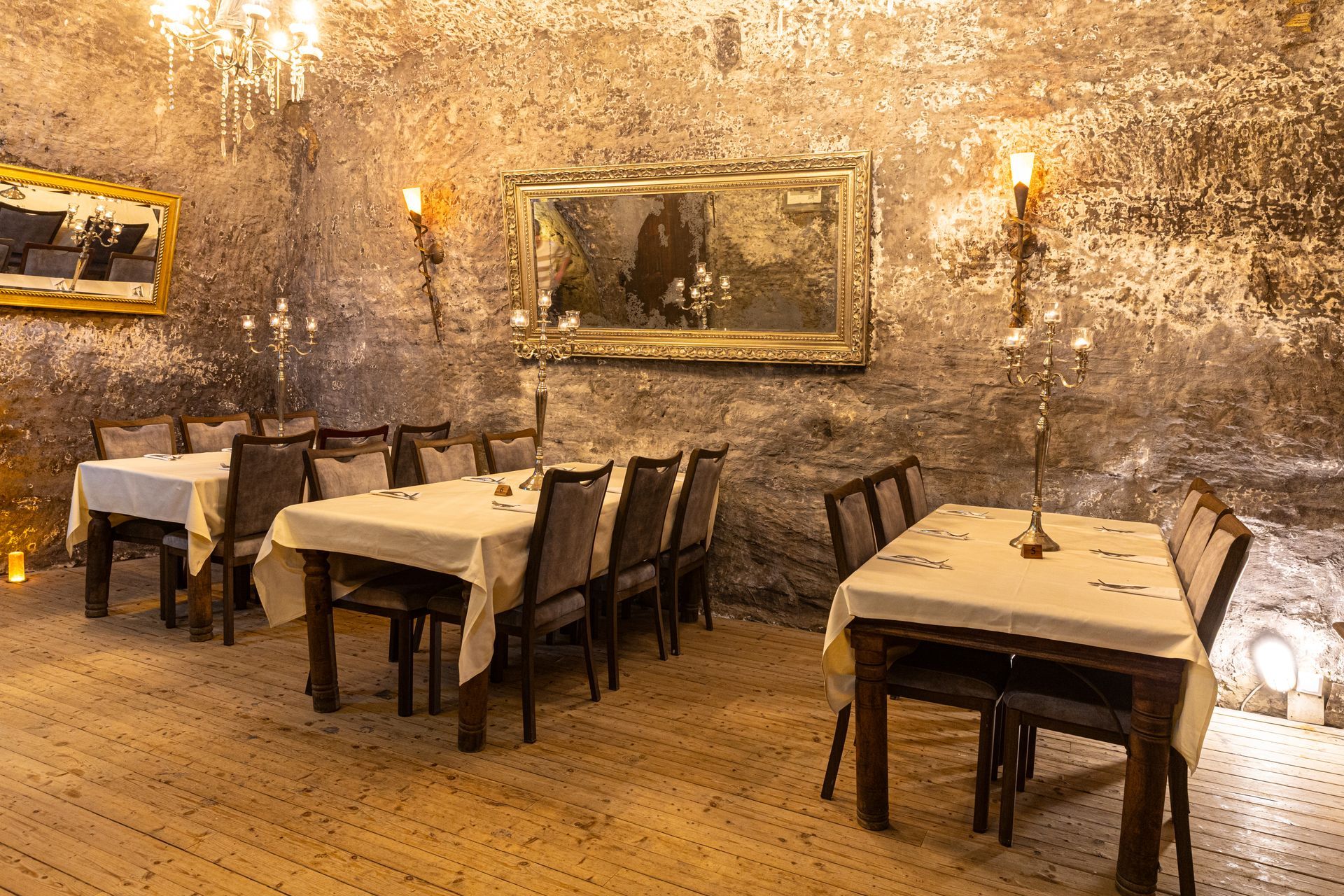
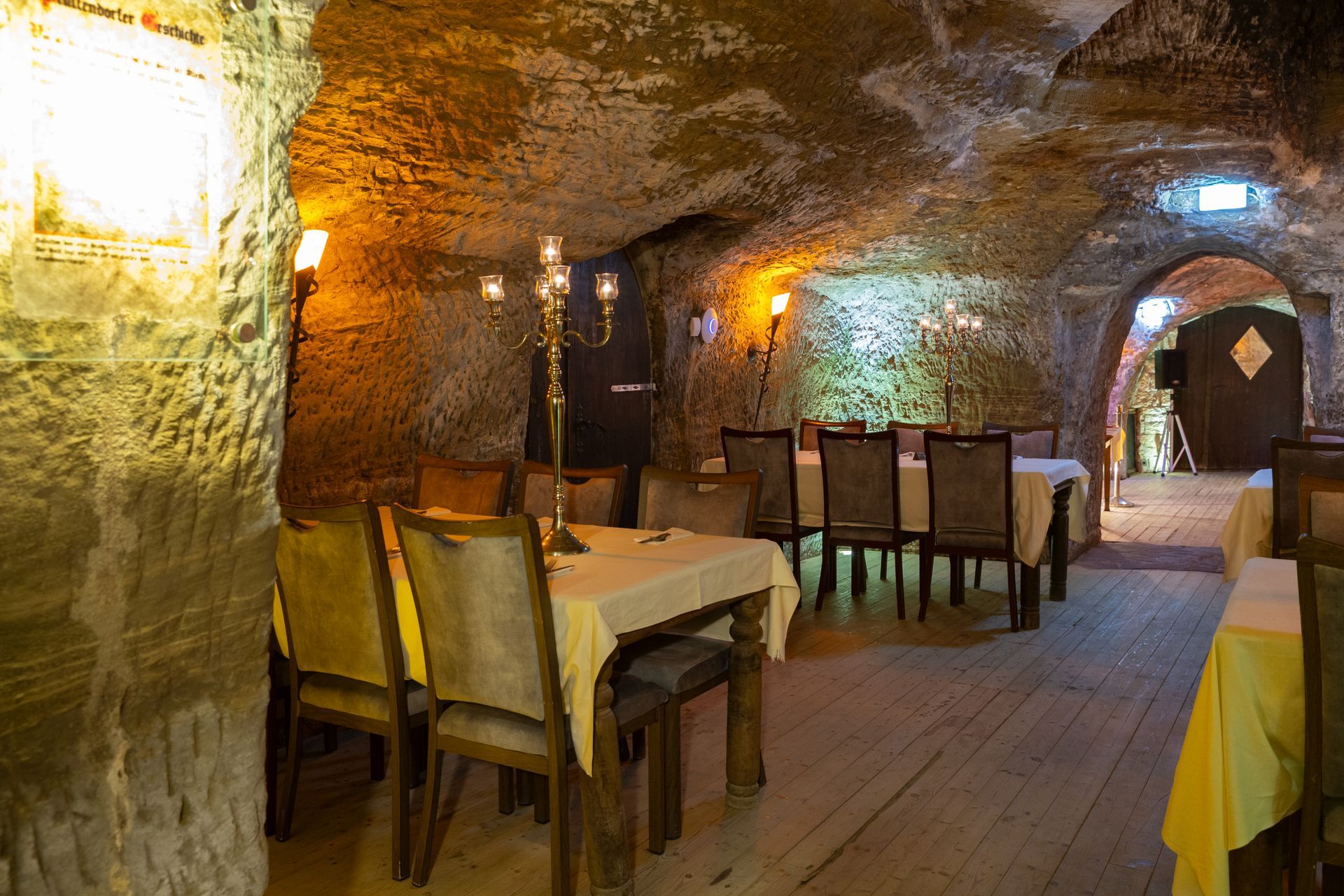
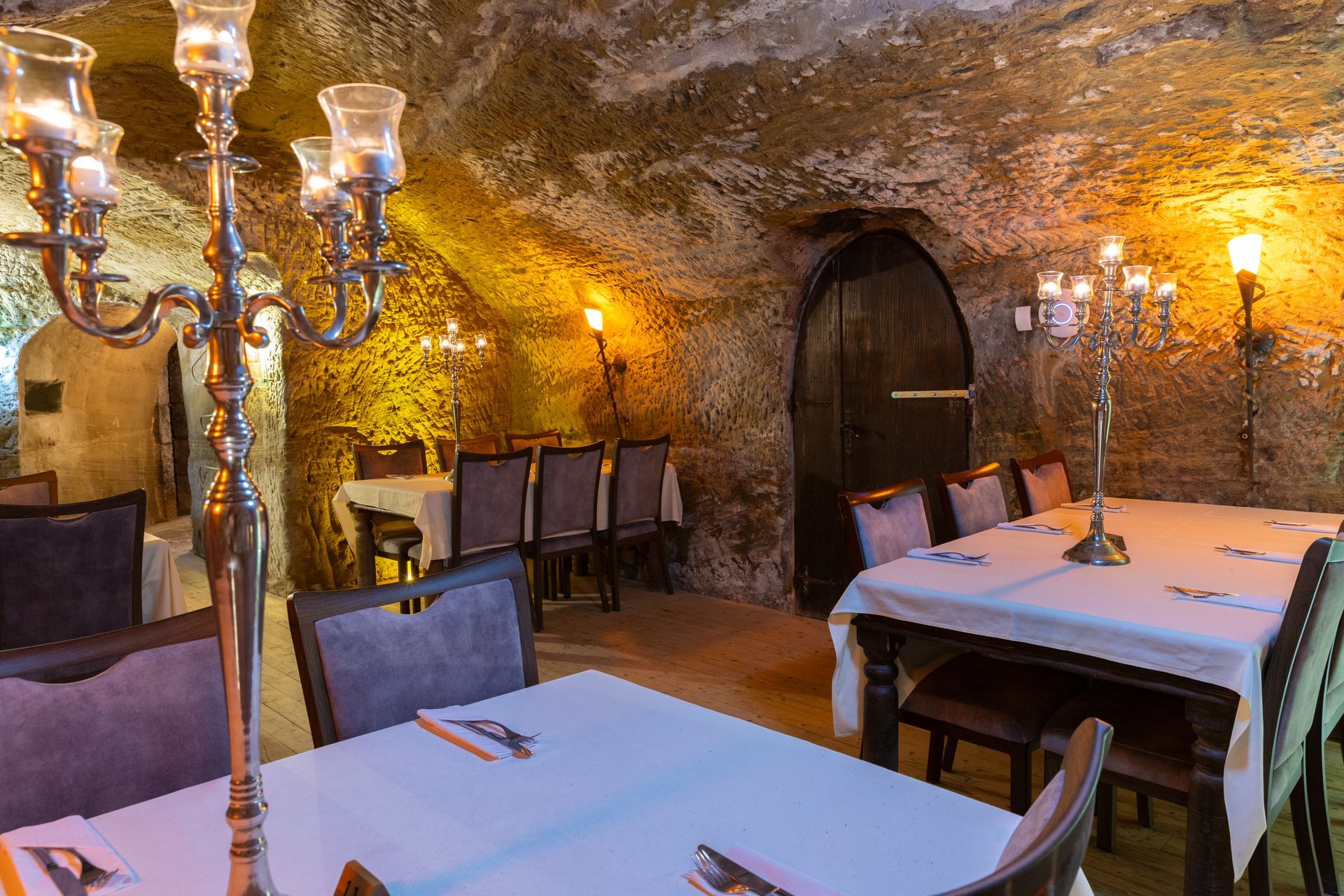
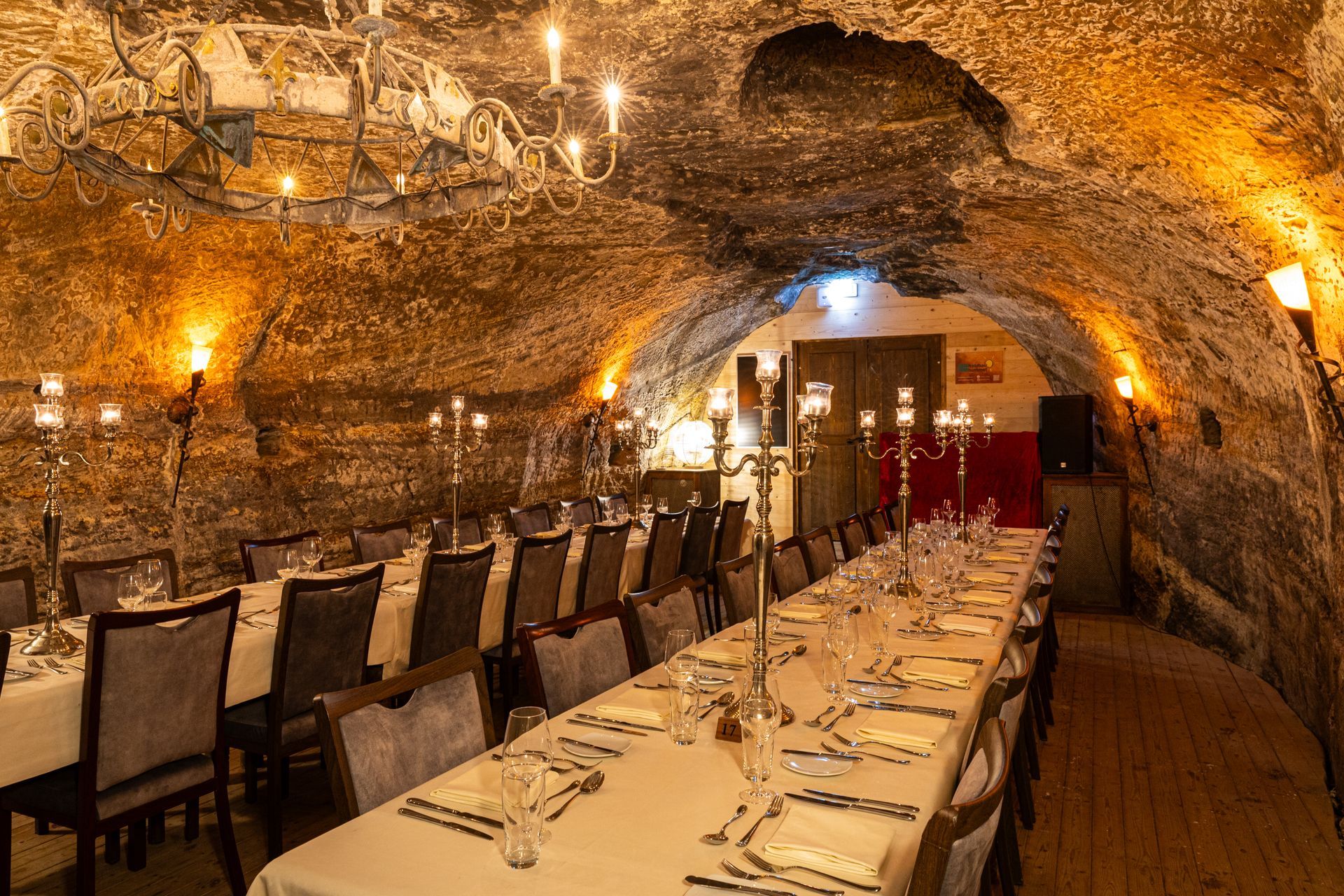
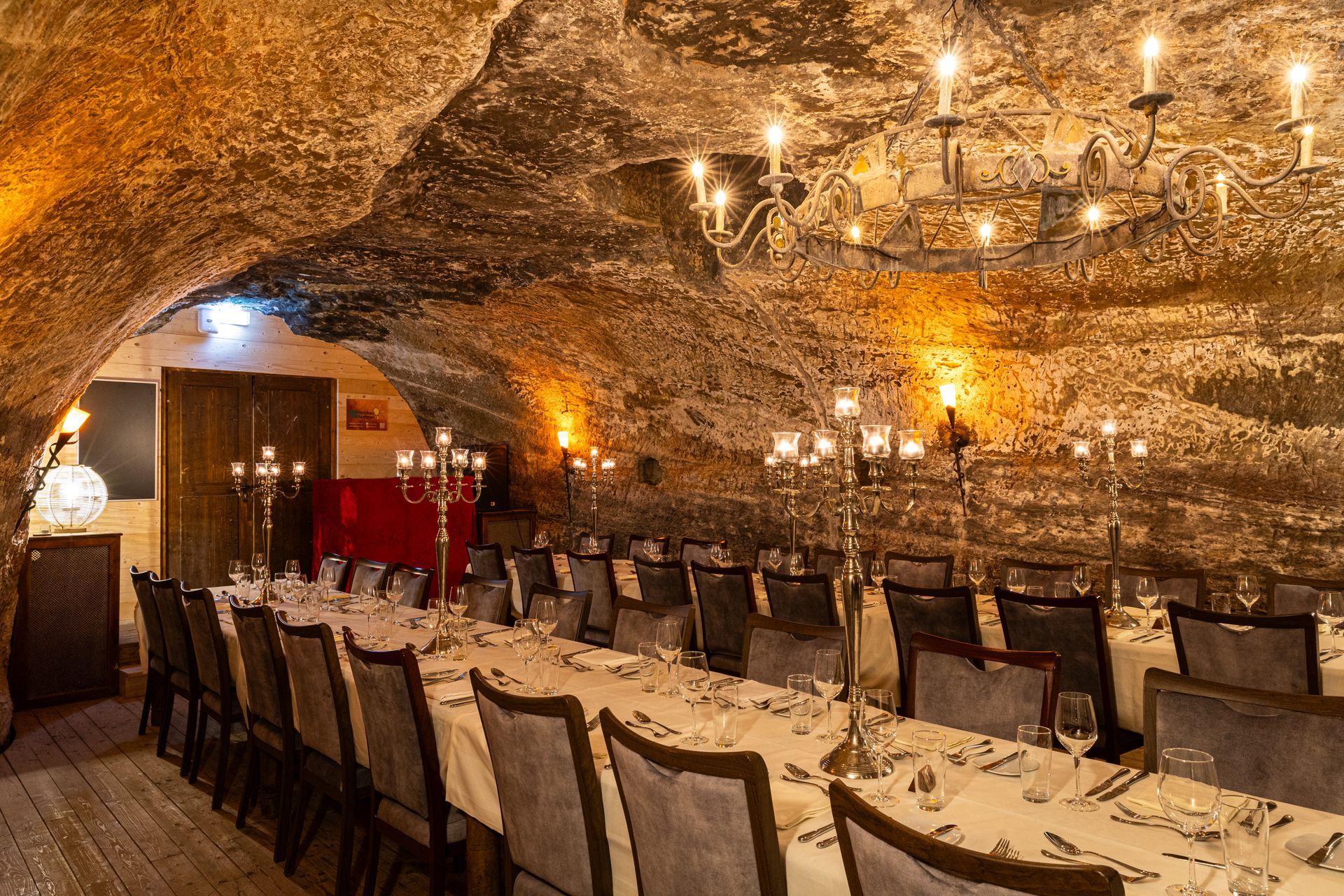
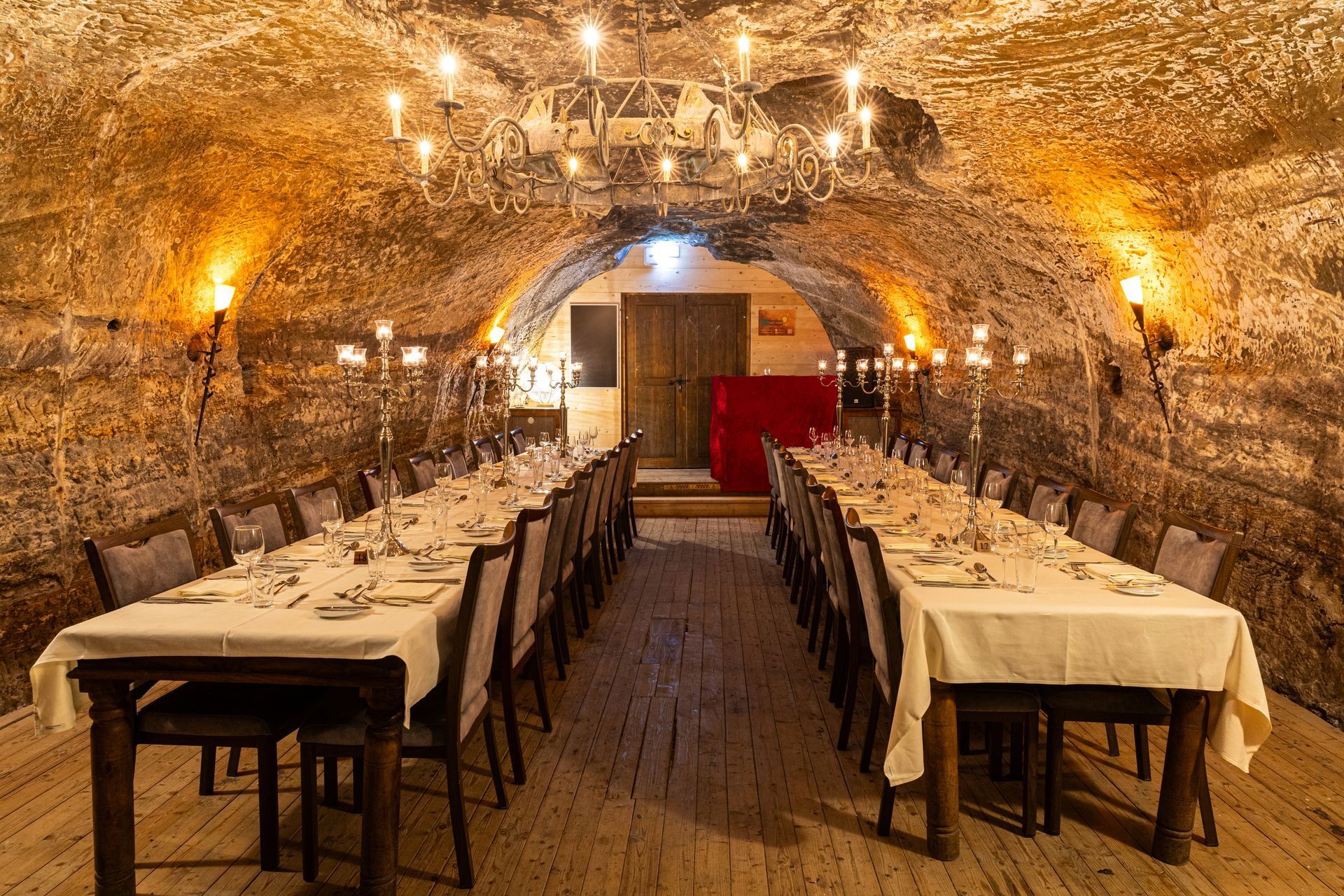
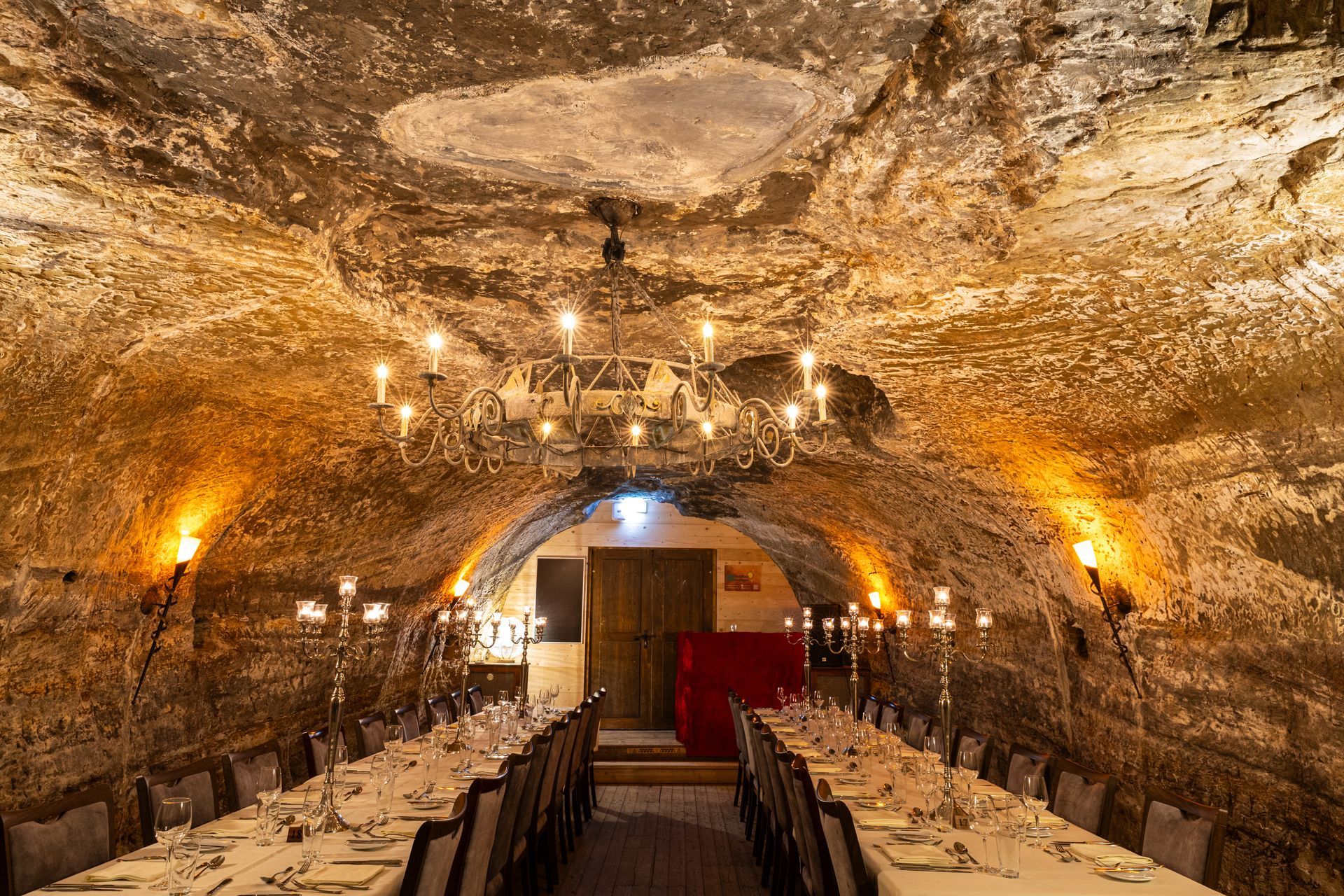
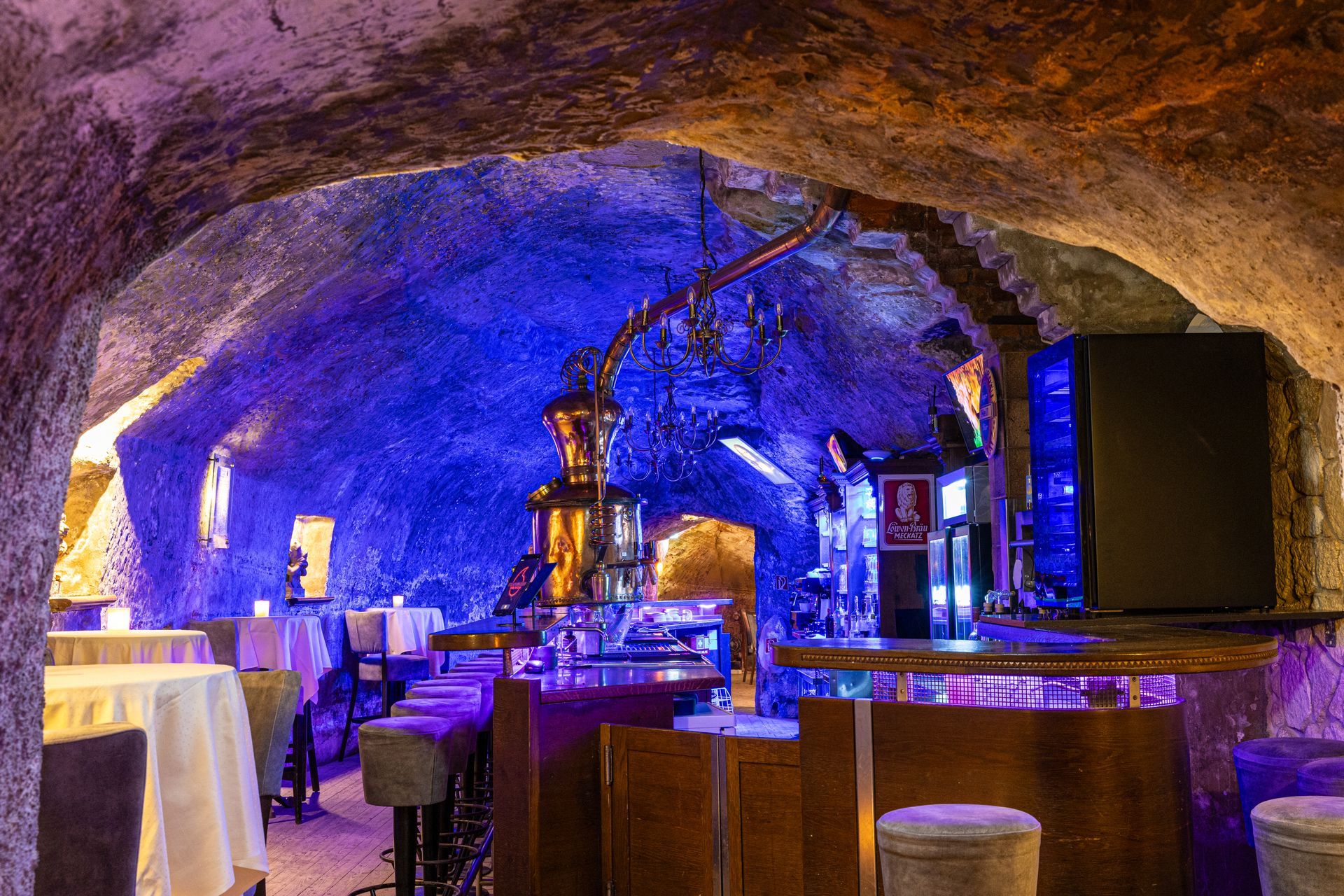
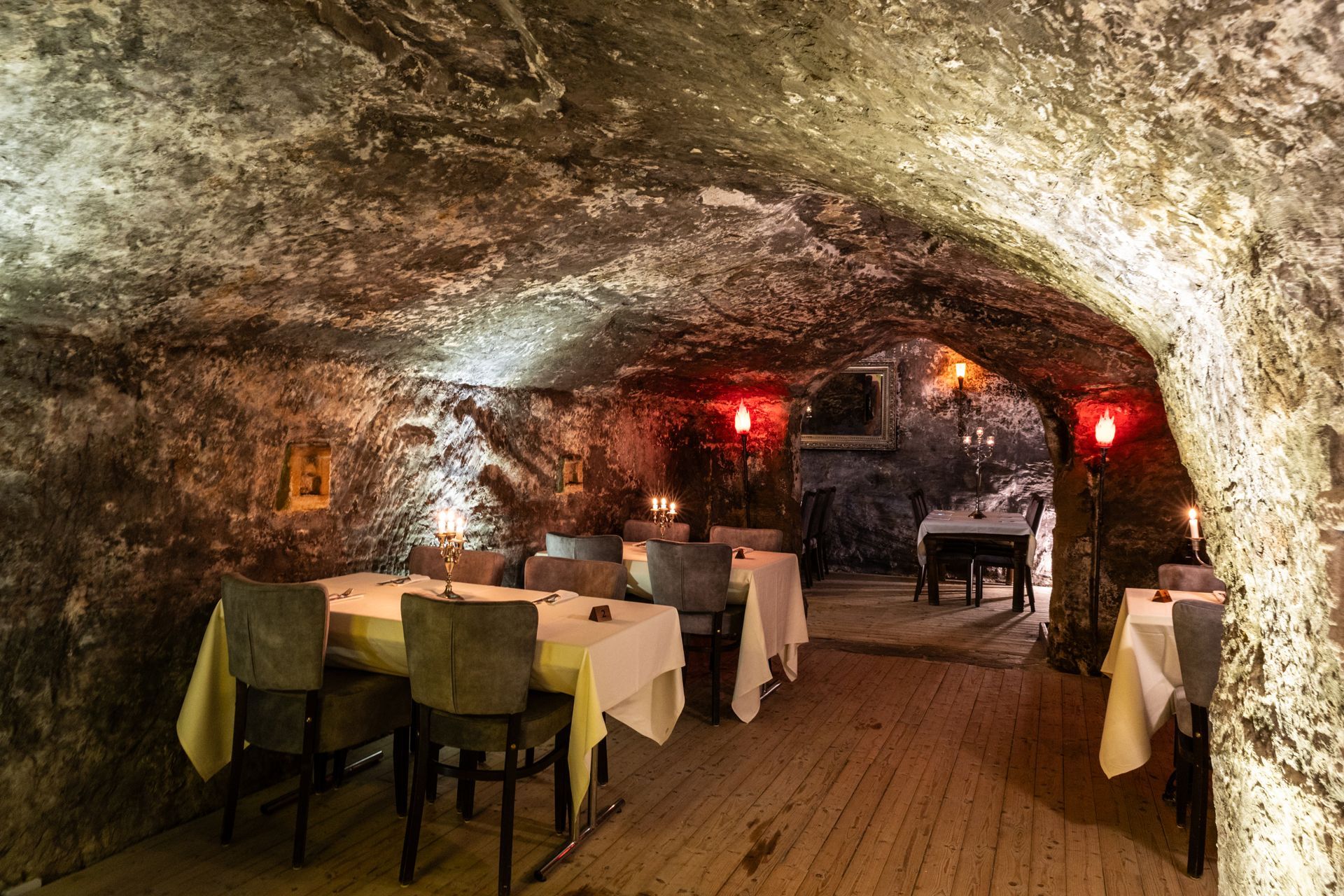
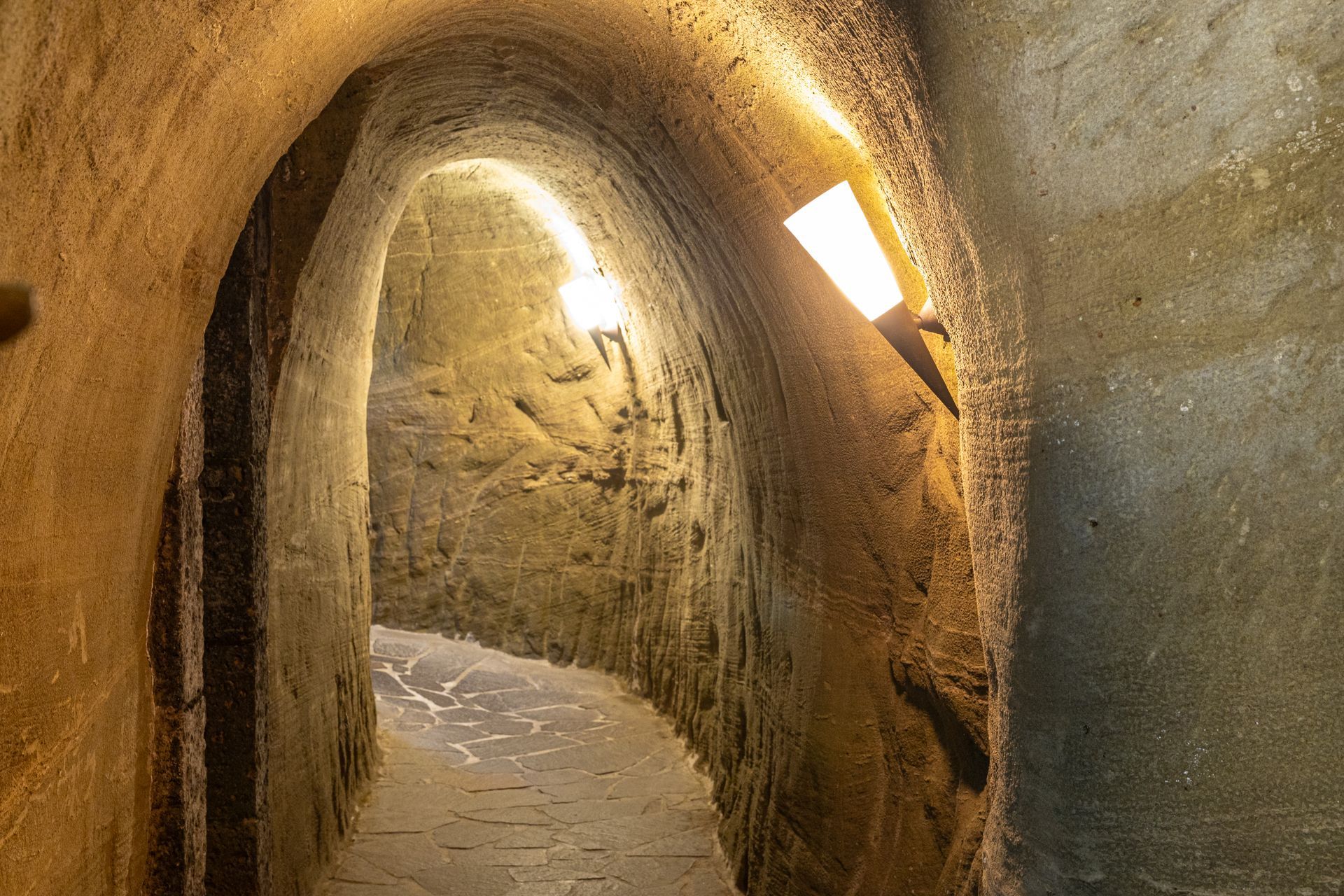
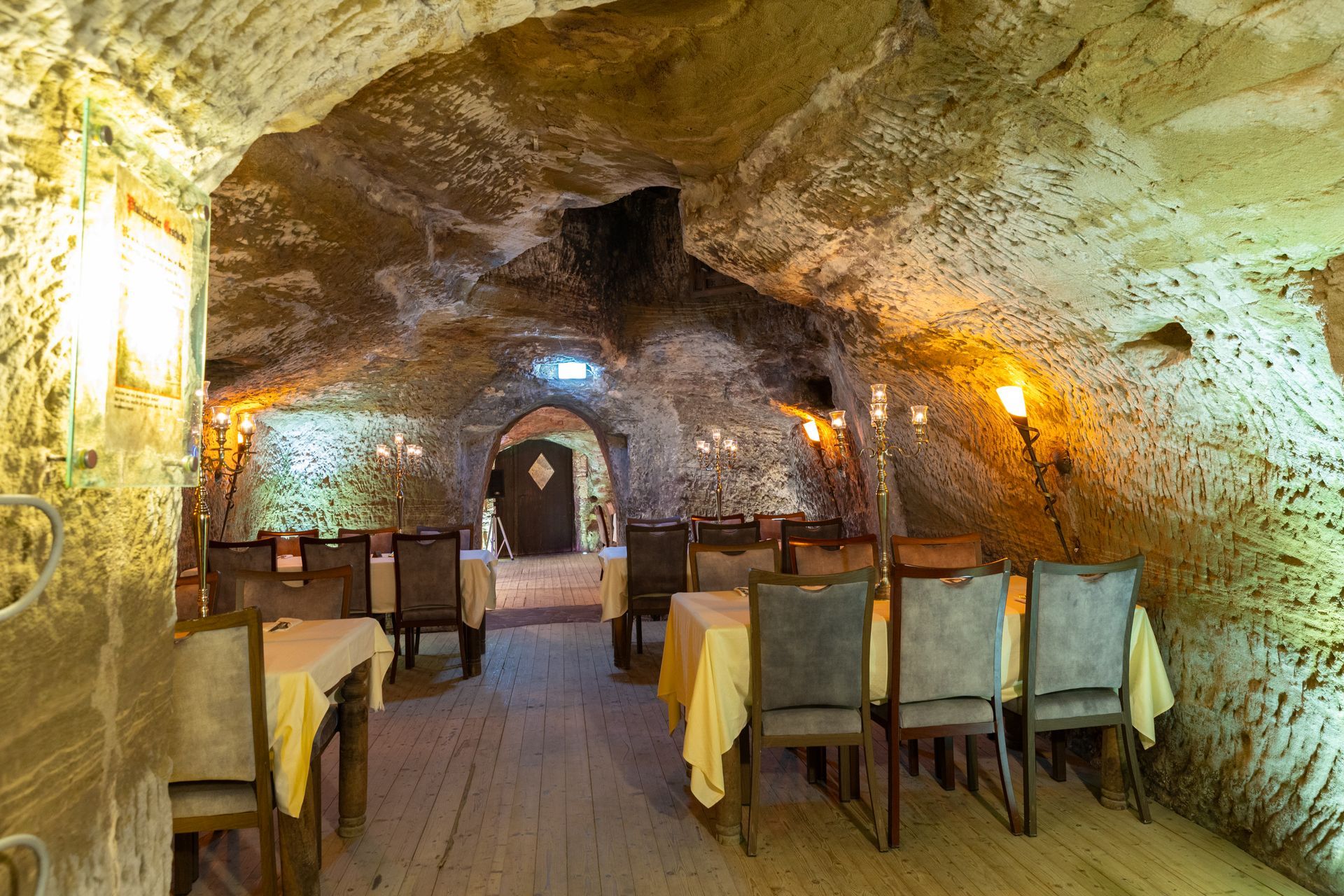
The traces of this work are still visible today. Uneven walls, natural shapes, and hand-hewn surfaces tell of a time when every meter was painstakingly carved from the rock.
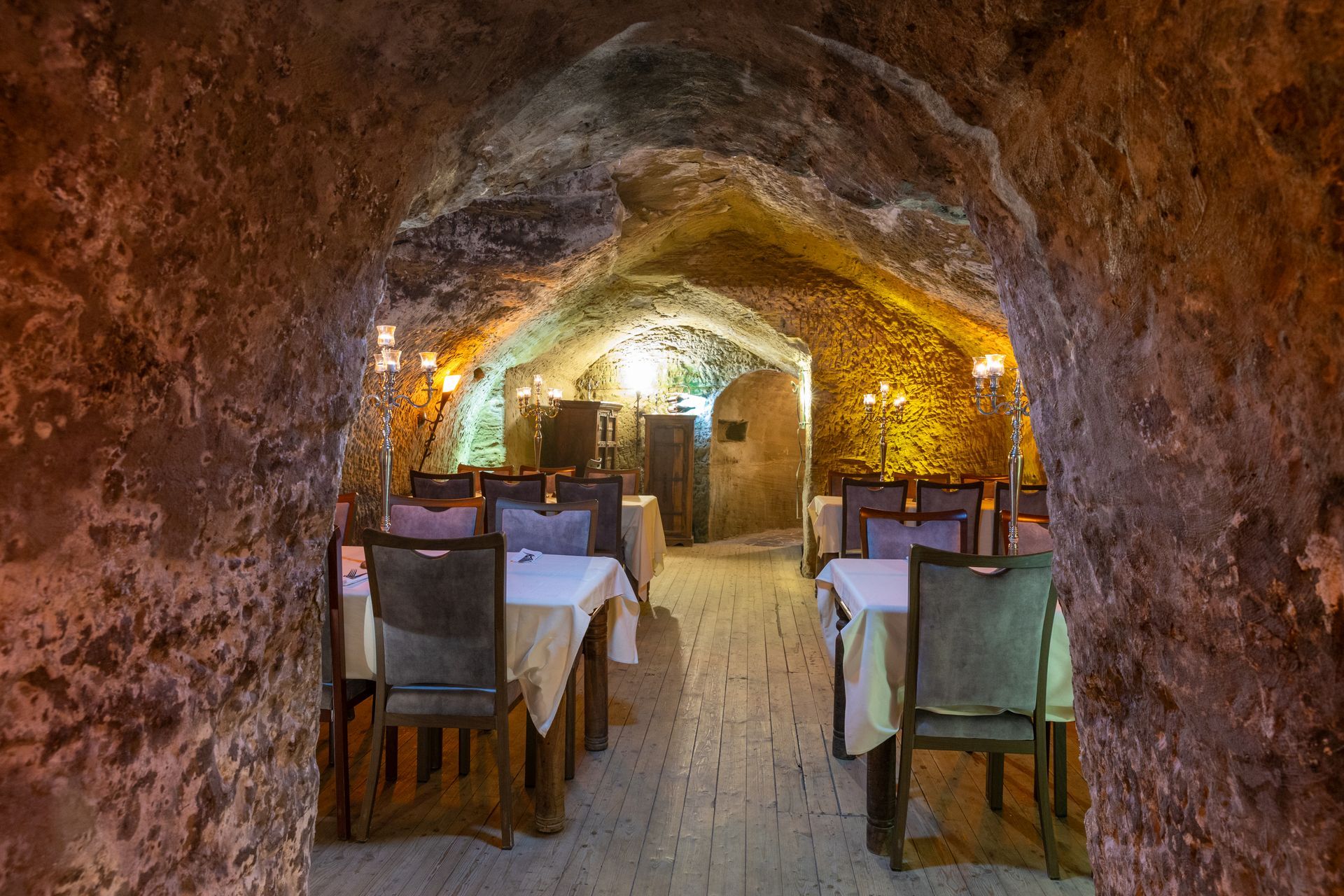
Thus, step by step, an underground vaulted system with several rooms, niches, and connections was created. No two rooms are alike. This is precisely what gives the rock cellar its character: it wasn't planned like a modern building, but rather developed from the stone itself.
The Time of Ice – Natural Cooling Beneath the City
Long before refrigerators and modern cooling systems existed, cellars like this one were of great importance.
The rock cellar offered ideal conditions for storing beer, food, and ice. The natural temperature is around 12°C. In addition, there is a very high humidity of over 90 percent.
These qualities made the cellar a perfect storage location. Ice was stored there in winter and used for cooling during the warmer months. The cellar was therefore of particular importance to the brewing and restaurant history of the Adler site.
The rock cellar was not just beautiful. It was practical, valuable, and vital for the survival of the business.
Adler's Beer Warehouse
For many decades, the cellar served as a beer and ice storage facility for the Hotel Adler.
The consistently cool temperature made it ideal for storing barrels, drinks, and provisions. In a time when refrigeration was expensive, difficult to access, or even unavailable, such a natural cellar was a true treasure.
The connection between the eagle, beer, storage, and cellar has shaped the history of this place to this day. The rock cellar was a functional part of the operation – hidden underground, but vital for life above.
World War II – Shelter under the vaults
During the war years, the rock cellar took on a further significance.
The massive vaults and the underground location offered people protection in a time of great uncertainty. The cellar was used as a shelter. What had previously been storage space became a place of safety in difficult times.
This period is part of the serious history of the rock cellar. The walls tell not only of beer, ice cream and gastronomy, but also of fear, protection and survival.
Hidden rooms and old stories
The rock cellar does not consist of just one room.
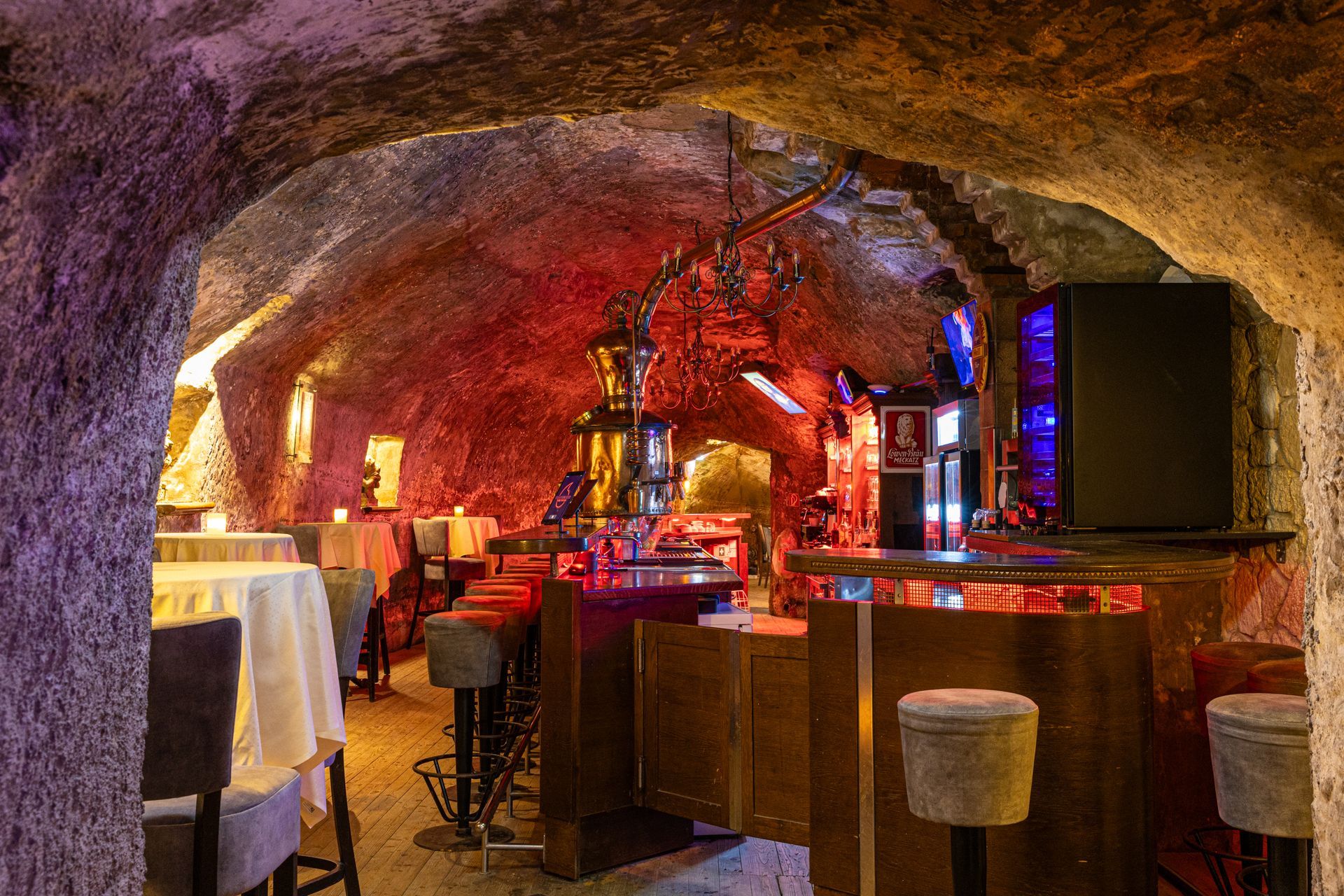
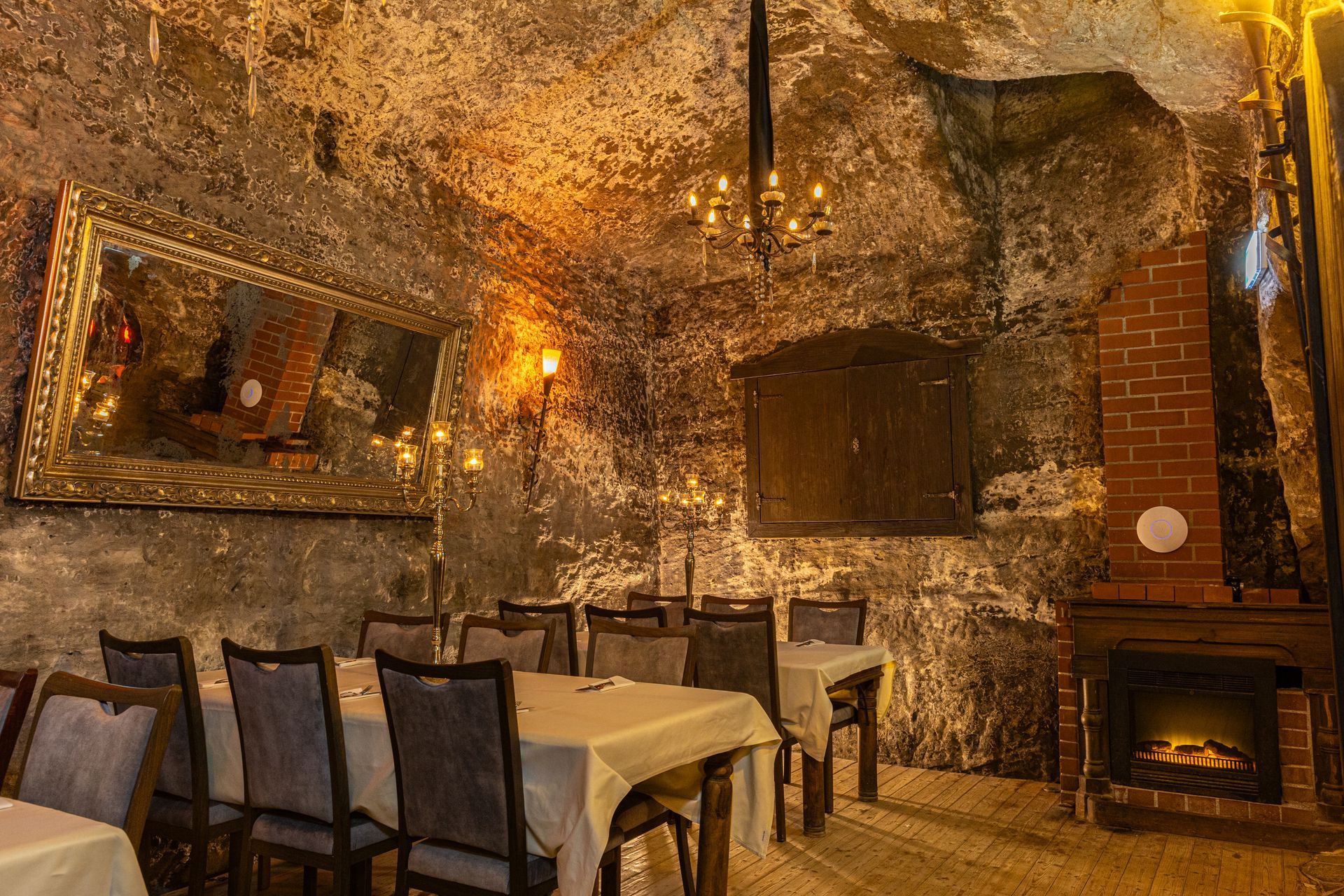
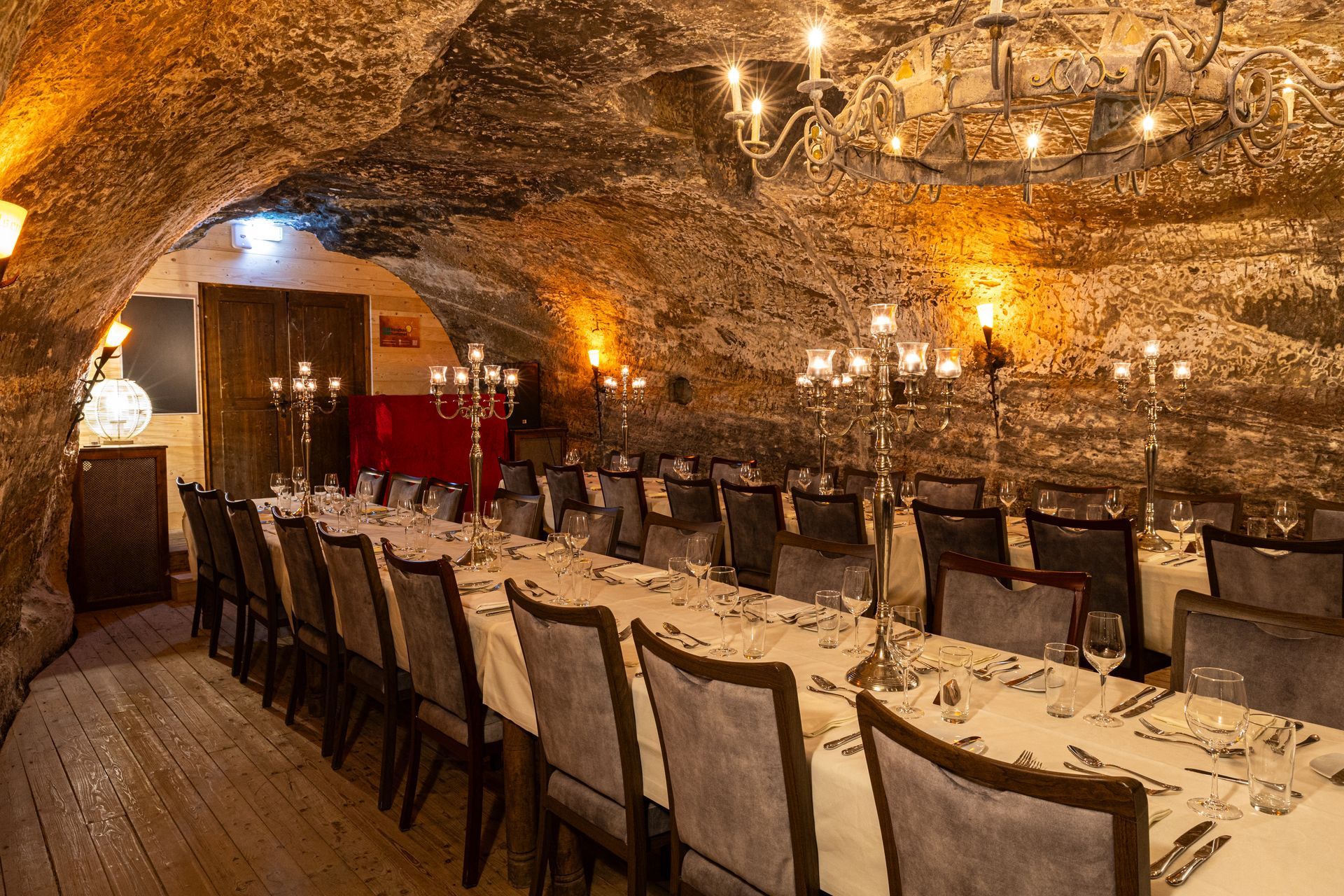
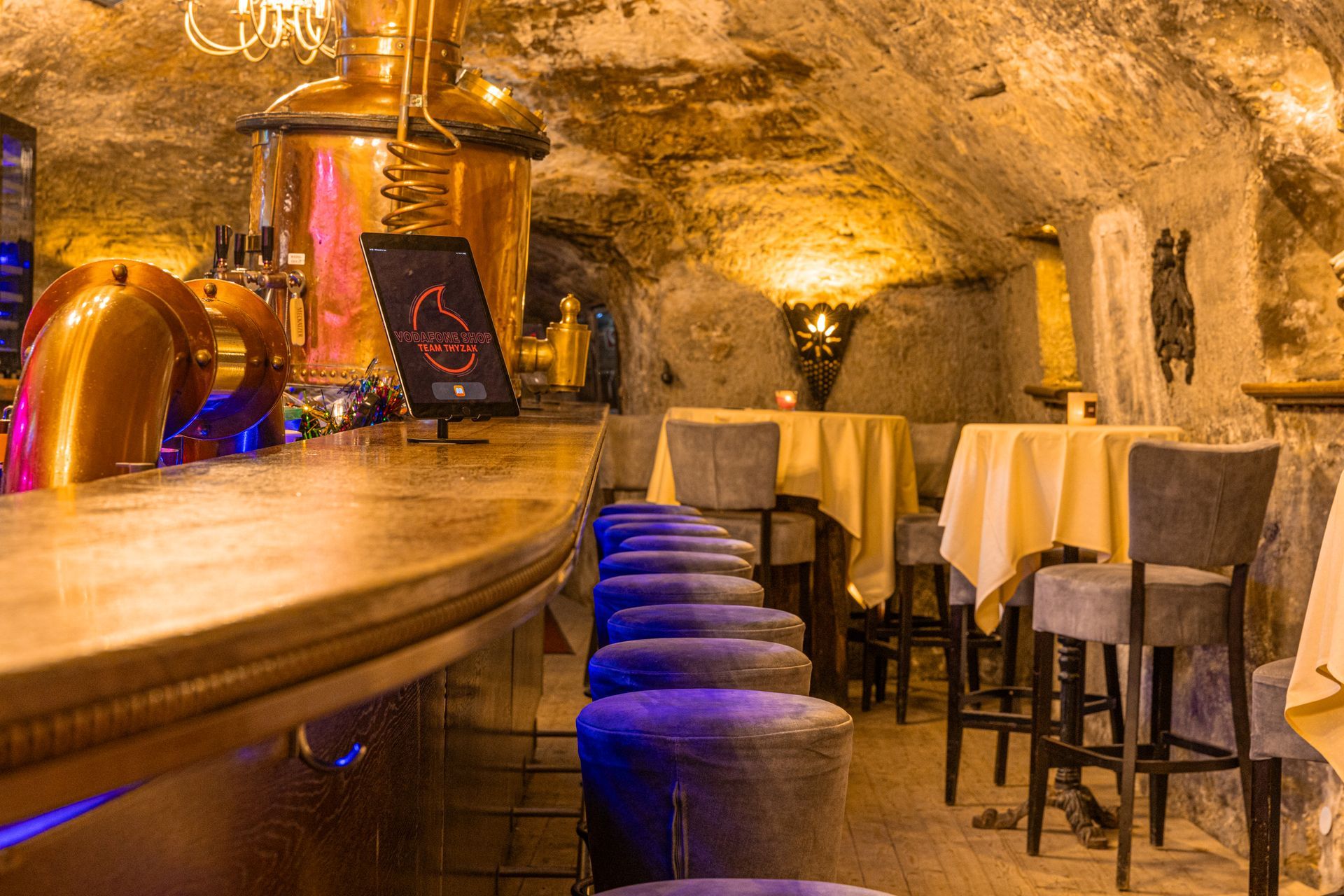
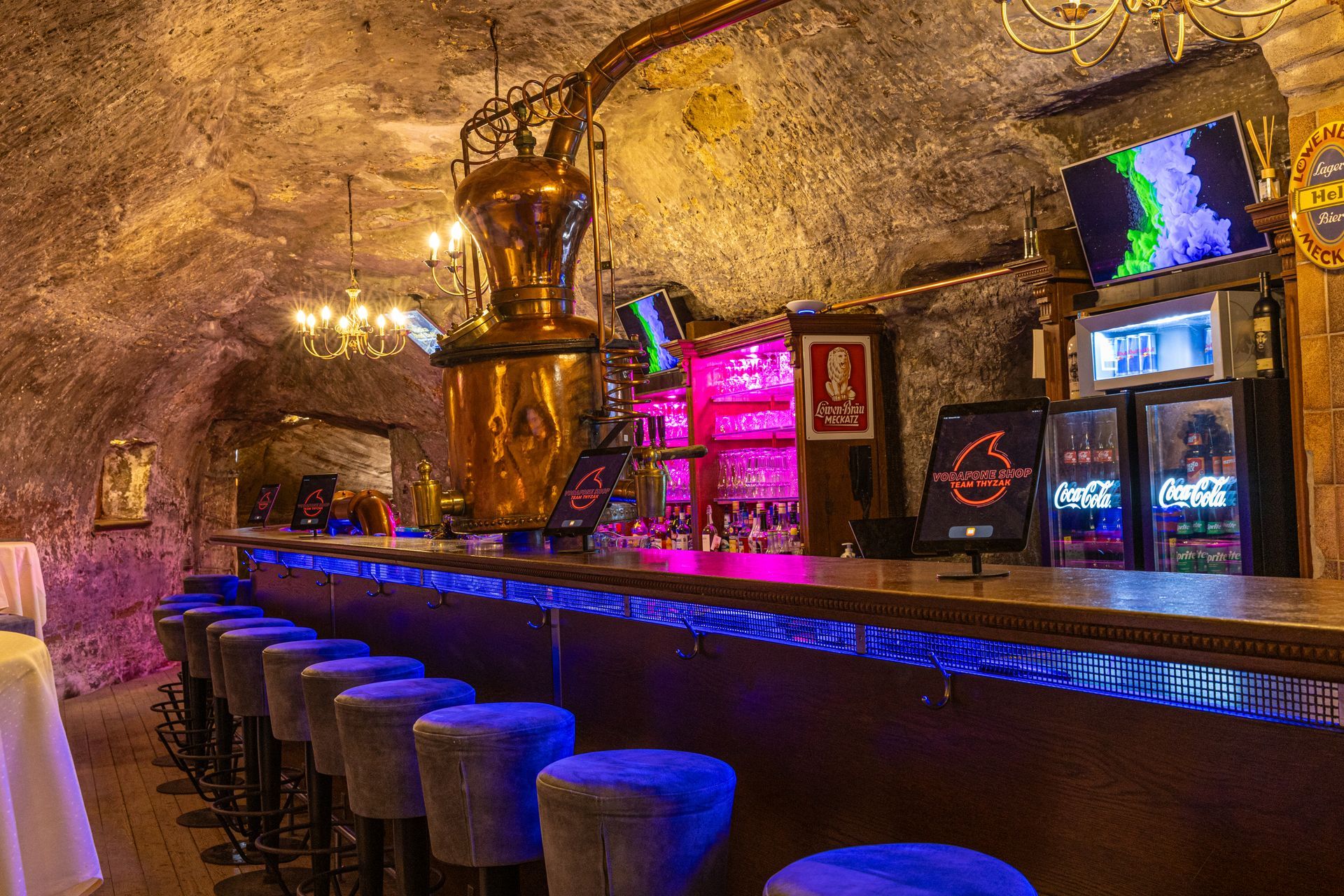
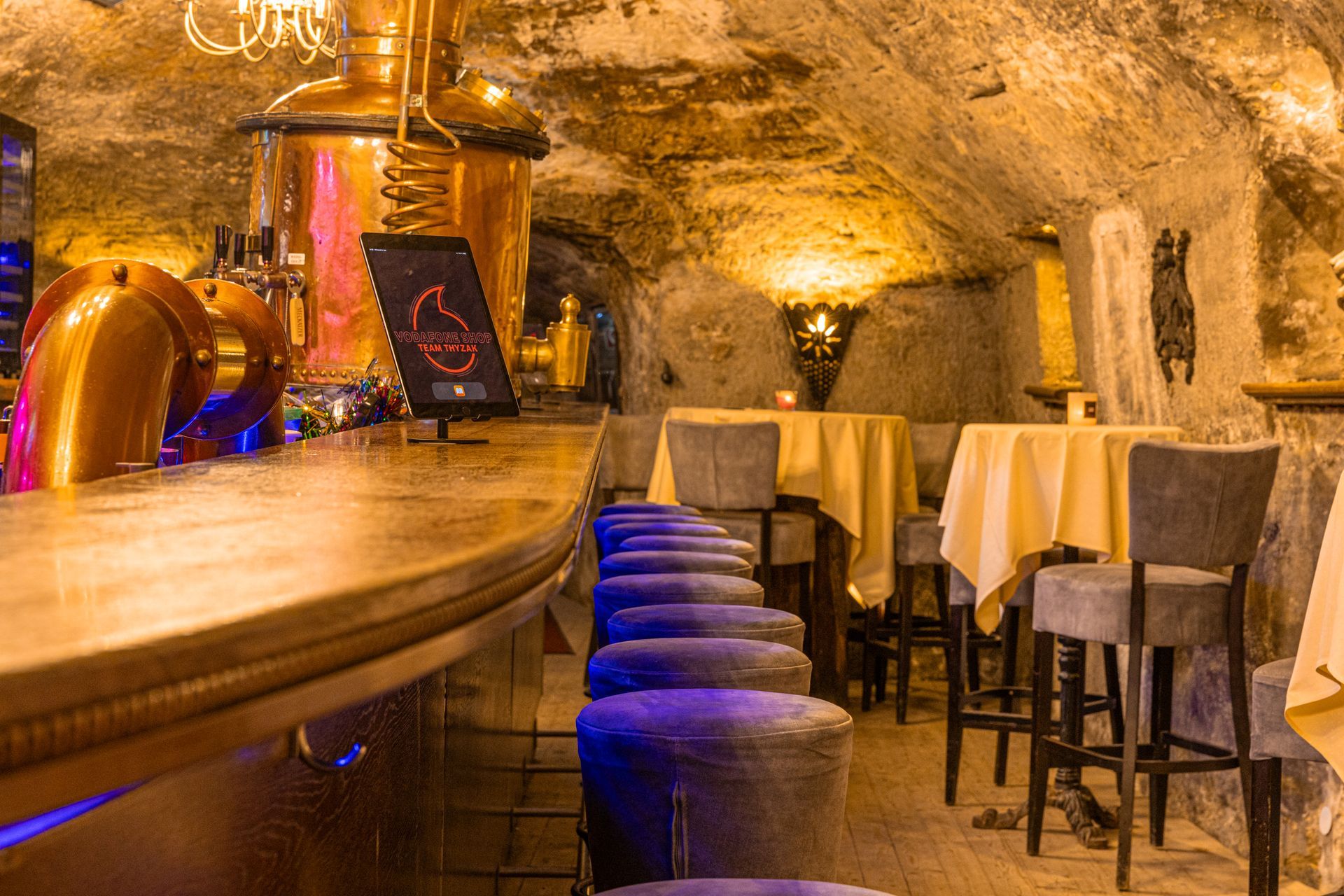
An impressive system of six historic vaults extends over approximately 300 m². This includes areas such as a cocktail bar, knights' hall, ice cellar, wine cellar, tunnel, brick cellar, fireplace area and other special zones.
Some areas feel open and inviting, others mysterious and almost hidden. It is precisely this mix that makes the place so fascinating.
There are stories of ancient connections, hidden paths, former uses, and spaces that are said to have played a special role in difficult times. Not every legend can be definitively proven today. But it is precisely this mixture of documented history, visible traces, and oral tradition that makes the rock cellar so vibrant.
The brick cellar – A room with a special effect
The brick cellar has a particularly mysterious feel.
Unlike the open rock chambers, it has its own unique atmosphere. Brick, narrowness, history, and silence create the feeling of entering a forgotten part of the cellar.
These spaces demonstrate that the rock cellar has been repeatedly altered, expanded, and adapted over many years. Each era has left its mark.
1994 – The Rediscovery
For many decades, the underground world remained largely hidden.
A new chapter began in the mid-1990s. In 1994, the potential of this place was rediscovered. Peter Leuschner saw something in this cellar that others had long overlooked.
He didn't just recognize old walls. He recognized atmosphere. Character. Experience.
What was just an old cellar to some suddenly became a vision.
The Flintstones Party – The Turning Point
A special moment became legendary: a farewell party with the theme "Fred Flintstone".
This celebration demonstrated for the first time the effect a cellar can have on people. The raw stone, the natural coolness, the vaulted ceilings, and the unusual atmosphere made the evening truly special.
The response was overwhelming. Suddenly it became clear: This place can be more than just an old cellar.
An idea became a vision.
The vision became a project.
And the project resulted in an experiential destination.
1997 – The expansion of the rock cellar
The intensive development of the rock cellar began in 1997.
Hundreds of cubic meters of sand and material had to be moved. Spaces were cleared, secured, and made usable. The natural conditions presented major challenges: high humidity, constant cold, water, technology, and ventilation.
Modern ventilation technology was necessary to make this historic place usable for guests. At the same time, its original character had to be preserved.
The result was a remarkable balancing act: preserving historical substance while simultaneously creating a functioning catering and event venue.
A place of fascination in the ancient rock
With the revival, the era of fascination with the ancient rock began.
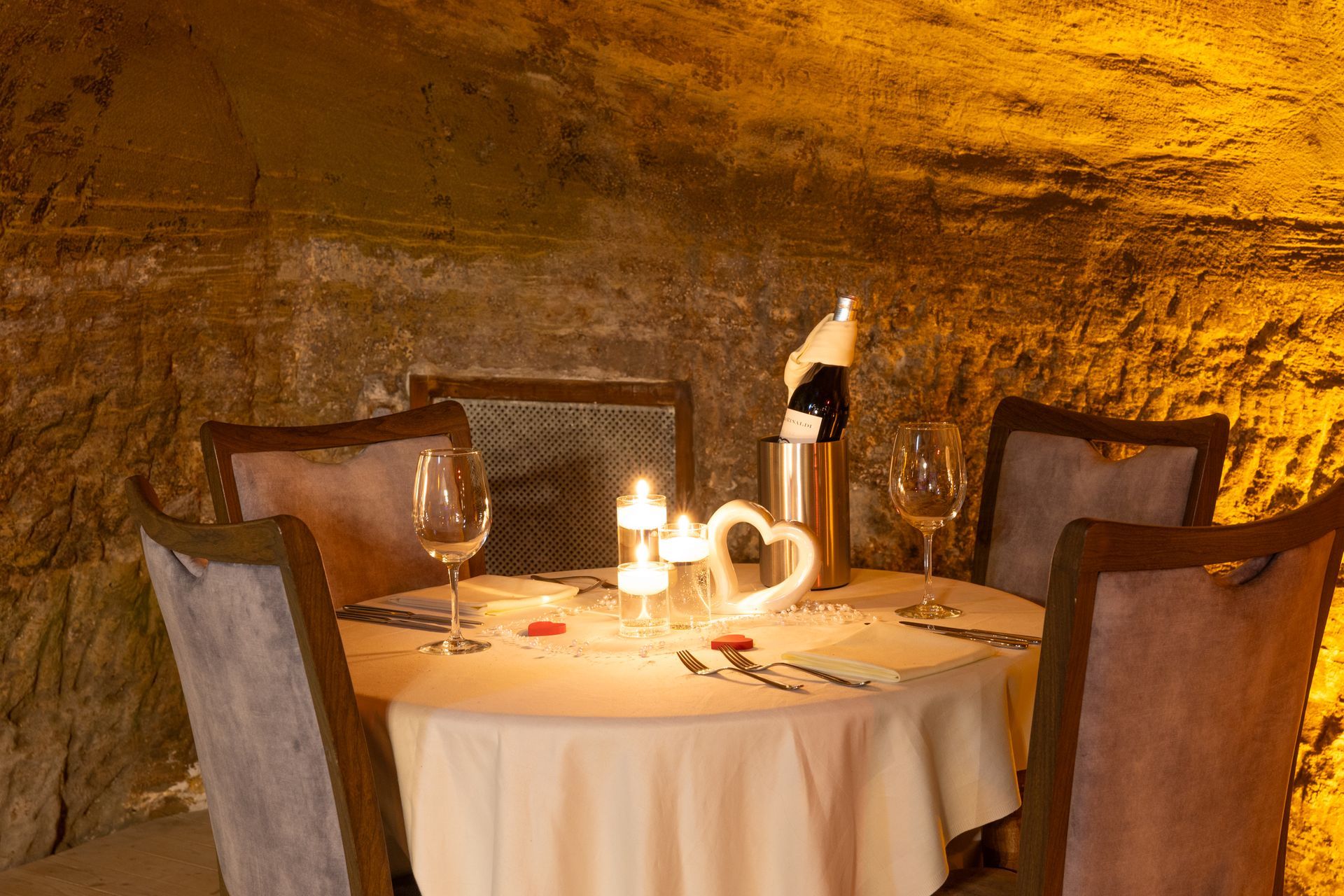
The rock cellar became a place for gatherings, celebrations, music, beer, wine, conversations, and special evenings. The 14-meter-long bar, the vaulted ceilings, the natural spatial effect, and the hidden details made it one of the most extraordinary places in Pfullendorf.
This was never just about the food. It was always about the atmosphere.
The guardians of the cellar
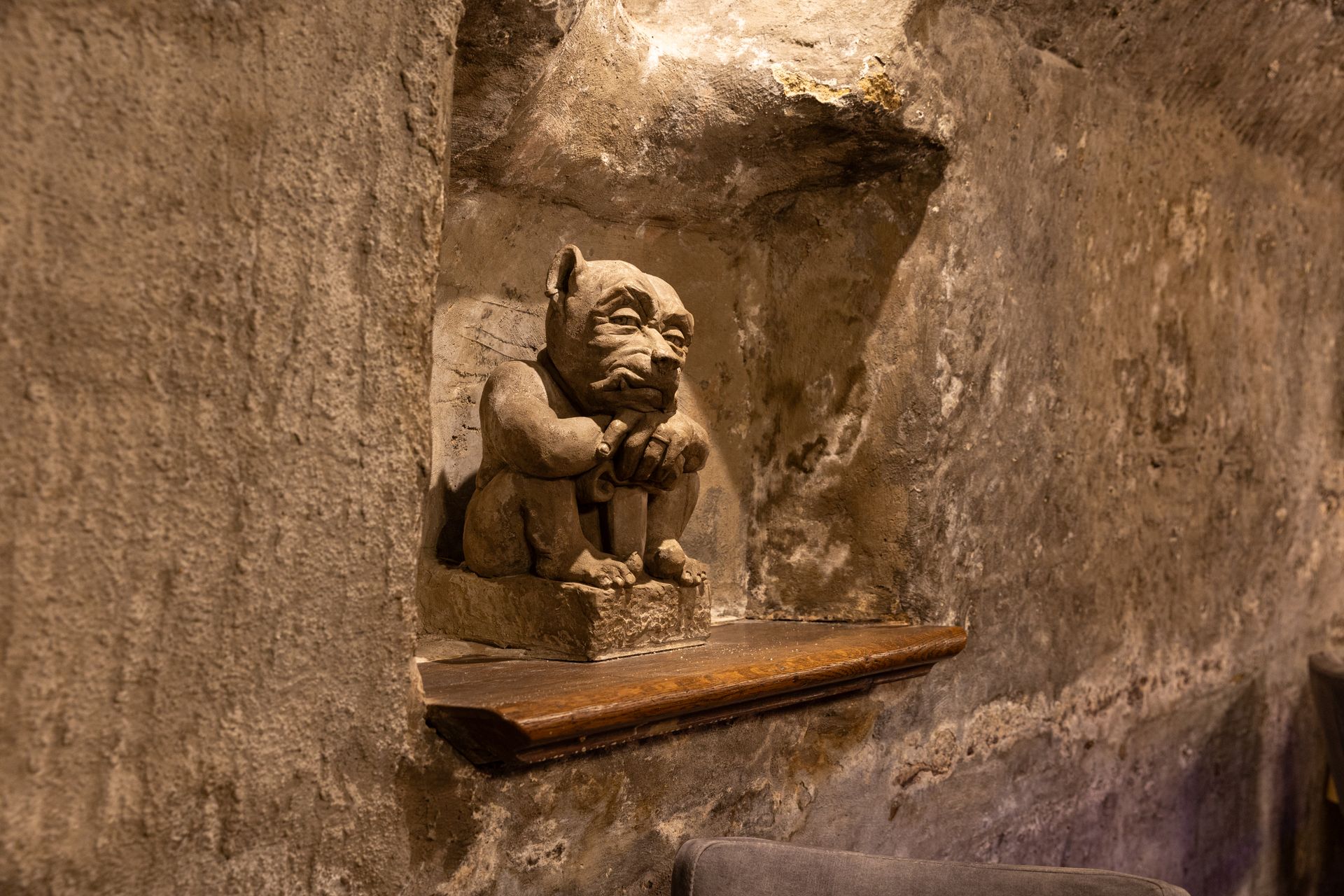
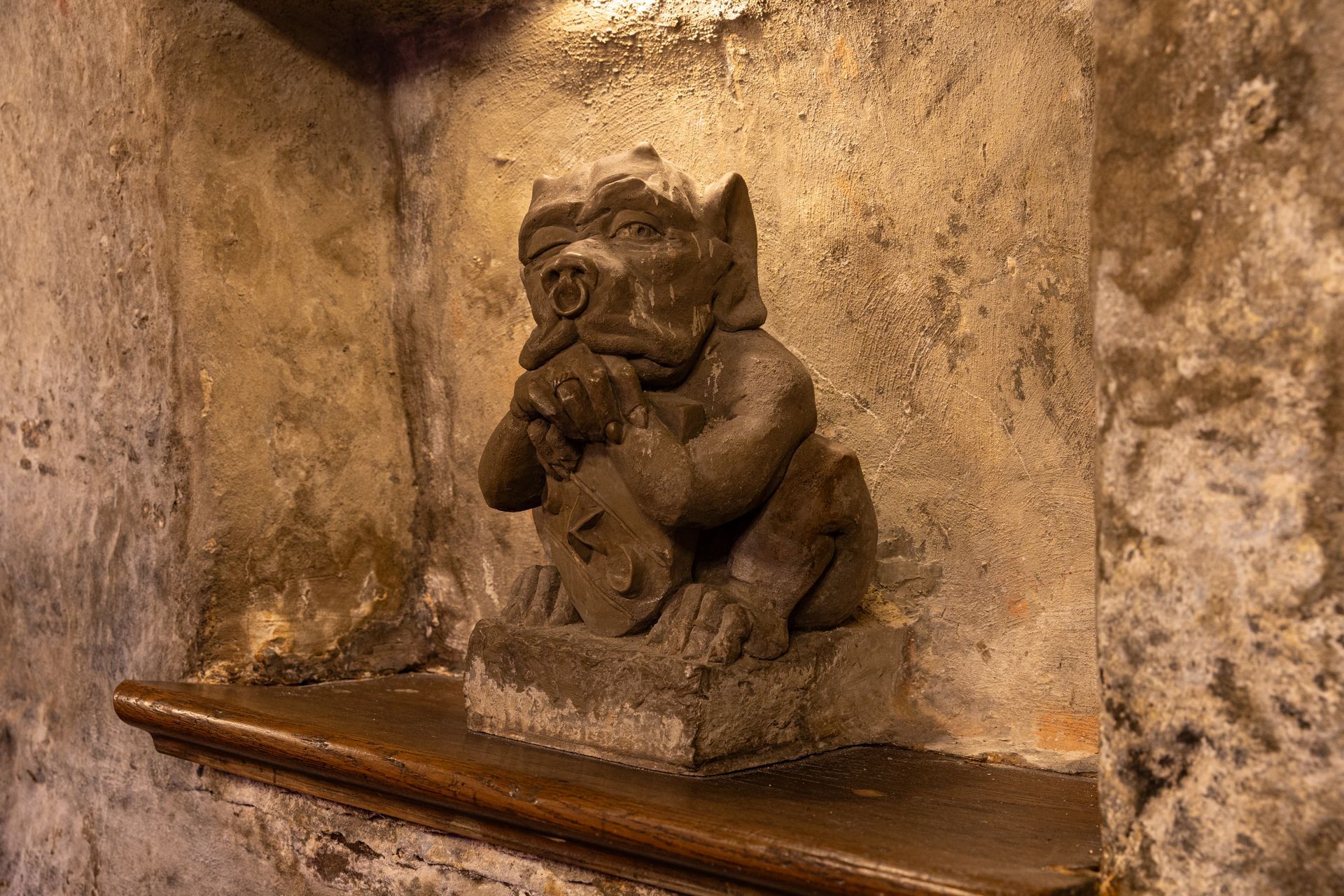
Since 1995, two special guardian figures have also been part of the history of the rock cellar.
They are not simply decorative objects in the room. They act like silent observers of a hidden world. Each figure possesses its own unique expression and character.
One symbolizes protection.
The other one appears darker, wilder, more frightening.
Whether you view them as art, symbol, or legend – they fit perfectly into this place. For the rock cellar thrives not only on facts, but also on images, emotions, and secrets.
2025 – The Revival
In 2025, a new chapter began.
The rock cellar has been revived – not as an ordinary restaurant, not as a simple bar, but as an experience venue under historic vaults.
Today, the rock cellar connects several worlds:
Story.
Gastronomy.
Cocktails.
Knights' evenings.
Events.
Mysticism.
Atmosphere.
The former ice cellar and beer storage area has been transformed into a place where past and present come together.
Today
Edmon Anti "Eddy" The man behind the rock cellar
Behind every special place is a person with a story.
Edmon Anti is standing behind the rock cellar.
He has lived and worked in Pfullendorf for many years. What began as a new home gradually became a place where ideas could become reality.
He gained his professional experience in customer service, organization, and leadership. But his greatest motivation has always been the desire to bring people together and create places people want to return to.
But anyone who knows Edmon Anti knows that he never just manages the status quo. He looks for ways to create something new and to reveal hidden potential.
When the opportunity arose to revitalize the historic rock cellar, he immediately recognized the uniqueness of this place. Where others saw an old cellar, he saw a piece of history that should be brought back to life.
Beneath the centuries-old vaults, a place has gradually emerged where history, gastronomy, and unique experiences merge. Today, the Felsenkeller welcomes guests from near and far, combining historical atmosphere with modern hospitality.
For Edmon Anti, the Felsenkeller is far more than a restaurant or an event venue. It is proof that courage, passion, and a clear vision can create something extraordinary.
"Because every great story begins with someone who believes in an idea long before others recognize it."